
Medical Cable Solutions
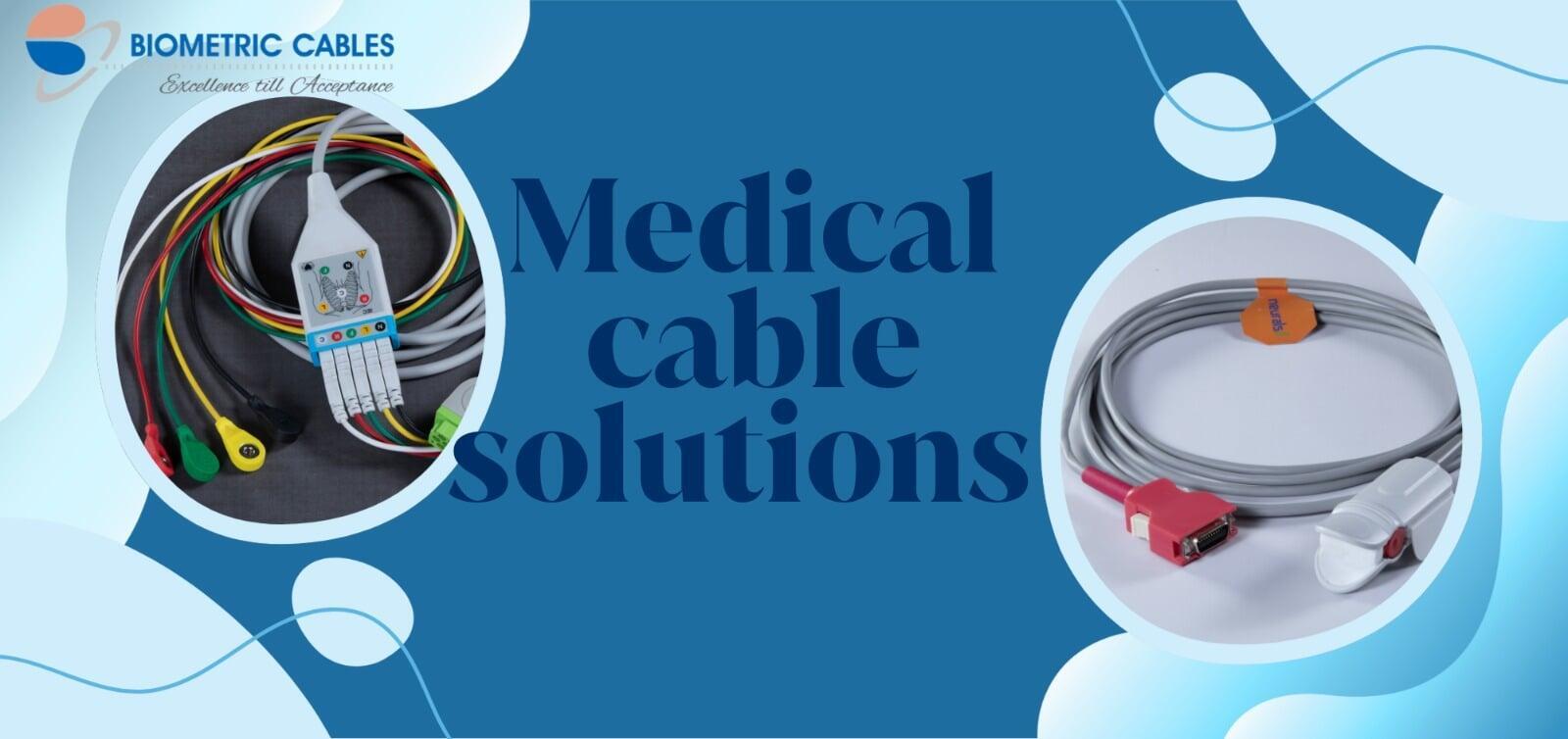
In modern healthcare environments, precision and reliability are non-negotiable. Behind every patient monitor, ventilator, infusion pump, diagnostic scanner, and surgical system lies a critical yet often overlooked component, the cable assembly. High-performance medical cable solutions ensure stable signal transmission, accurate data flow, and uninterrupted power delivery in life-saving equipment.
For OEM manufacturers and healthcare technology providers, choosing the right medical cable solutions partner is essential to ensure compliance, durability, and long-term reliability.
This comprehensive guide explores medical cable solutions, applications, materials, standards, customization options, and how to select the right medical device cable manufacturer.
What Are Medical Cable Solutions ?
Medical cable solutions refer to specialized cable assemblies, wiring harnesses, connectors, and integrated cable systems designed specifically for use in medical devices and healthcare equipment.
Unlike industrial cables, medical cables must meet strict regulatory, safety, and performance standards because they operate in patient-care environments. These solutions are engineered to:
Transmit sensitive signals without interference
Deliver stable electrical power
Maintain biocompatibility where required
Withstand sterilization processes
Meet global medical device standards
Why Medical Cable Solutions Are Critical in Healthcare?
Modern medical devices rely heavily on precise electronic communication. Any disruption in signal transmission can impact diagnostic accuracy or patient safety.
High-quality medical cable solutions provide:
1. Accurate Signal Transmission
Sensitive equipment such as ECG monitors and imaging systems require interference-free data transfer.
2. Electrical Safety
Proper insulation and shielding prevent electrical hazards.
3. Equipment Longevity
Durable medical-grade materials extend device life.
4. Patient Safety Compliance
Compliance with ISO and regulatory standards ensures safe device operation.
5. Reduced Downtime
Reliable cable assemblies minimize service interruptions.
In short, medical cable solutions directly impact the performance and reliability of healthcare equipment.
Types of Medical Cable Solutions
A professional medical device cable manufacturer offers a range of solutions tailored to specific applications.
1. Custom Medical Cable Assemblies
Designed to meet exact OEM specifications for device integration.
2. Patient Monitoring Cables
Used in ECG machines, multi-parameter monitors, and telemetry systems.
3. Medical Wire Harness Assemblies
Structured bundles of wires for internal device connections.
4. Coiled Cables
Ideal for dynamic medical environments.
5. Silicone Medical Cables
Flexible and resistant to extreme temperatures.
6. Sterilizable Cable Solutions
Built to withstand autoclaving and chemical sterilization.
Materials Used in Medical Cable Solutions
Material selection is critical in developing reliable medical cable solutions.
Common materials include:
Medical-Grade PVC
Flexible and durable for general applications.
Silicone Insulation
High flexibility and temperature resistance.
PTFE (Teflon)
Excellent chemical resistance and insulation properties.
Thermoplastic Elastomers (TPE)
Soft-touch, flexible materials suitable for patient-contact devices.
Thermoplastic Polyurethane (TPU)
Flexible and skin-friendly material for medical use.
Shielding Materials
Copper braid or foil shielding for EMI protection.
Choosing the correct material ensures long-term reliability and compliance.
Applications of Medical Cable Solutions
High-performance medical cable solutions are used across multiple healthcare sectors.
ICU & Critical Care Equipment
Ventilators
Infusion pumps
Defibrillators
Syringe pumps
Patient Monitoring Systems
ECG machines
SPO2 sensors
Blood pressure monitors
Diagnostic Equipment
Ultrasound systems
CT scanners
MRI machines
Surgical Equipment
Electrosurgical units
Anesthesia machines
Surgical imaging devices
Laboratory & Diagnostic Devices
Blood analyzers
Automated lab systems
Each application requires specific insulation, shielding, flexibility, and compliance levels.
Benefits of Choosing Professional Medical Cable Solutions
Investing in professional medical cable solutions offers:
Improved device reliability
Enhanced patient safety
Regulatory compliance
Reduced maintenance costs
Lower risk of electrical failure
Better signal integrity
Extended product lifespan
For medical device manufacturers, reliability translates into market trust.
Standards & Compliance in Medical Cable Solutions
Regulatory compliance is mandatory in medical device manufacturing.
Reliable medical cable solutions must meet:
ISO 13485
Quality management system standard for medical devices.
IEC 60601
Electrical safety standard for medical equipment.
IPC/WHMA-A-620
Workmanship standards for cable assemblies.
UL Certification
Electrical safety compliance.
RoHS Compliance
Restriction of hazardous substances.
Compliance strengthens product credibility and supports global market access.
Biocompatibility test:
Biocompatibility testing is a regulatory and clinical safety requirement for medical cables that come into direct or indirect contact with patients. Even though cables may appear as simple conductive assemblies, their insulation, jacketing materials, strain reliefs, and adhesives interact with skin and potentially bodily fluids.
Custom Medical Cable Solutions for OEMs
OEM manufacturers often require fully customized cable assemblies.
Custom medical cable solutions include:
Custom connector integration
Specific wire gauge configurations
Overmolding and strain relief
Shielding customization
Miniaturized cable assemblies
Color coding and labeling
Multi-branch cable assemblies
Customized Panel connectors
Custom engineering ensures seamless integration with medical devices.
Design Considerations for Medical Cable Solutions
Developing effective medical cable solutions demands precision engineering to meet clinical demands, regulatory standards, and patient safety. Proper design minimizes field failures, ensures device reliability, and supports seamless integration into patient monitors, ventilators, infusion pumps, and diagnostic systems.
Flexibility Requirements
Devices with frequent movement require high-flex cables.
Environmental Resistance
Cables must withstand cleaning chemicals and disinfectants.
EMI Shielding
In imaging modalities (MRI/CT), ECG monitors, or SpO2 sensors, electromagnetic interference can corrupt critical signals. Incorporate foil + braid shielding (85-95% coverage), twisted pairs for differential signaling, and symmetric grounds.
Durability & Longevity
Oversized strain reliefs, double jackets, and fatigue-resistant materials ensure 5-10 year life under tugs and thermal stress.
Connector Compatibility
Patient safety demands secure, tamper-proof mating with latching mechanisms like thumb screws, bayonet locks, or push-pull systems (e.g., Lemo, Fischer). Keying prevents mis-mating, gold-plated contacts ensure <20 mΩ resistance and 1000+ cycles, and color-coding aids field identification.
Integrated Design Validation
Developing effective medical cable solutions demands precision engineering to meet clinical demands, regulatory standards, and patient safety. Proper design minimizes field failures, ensures device reliability, and supports seamless integration into patient monitors, ventilators, infusion pumps, and diagnostic systems.
Quality Control in Medical Cable Solutions
In medical cable assemblies, quality control is not just a factory step; it is a patient‑safety requirement. Every harness must reliably carry signals and power in demanding clinical environments, often under constant movement, repeated cleaning, and long‑term use.
A robust quality control process for medical cable harnesses typically includes:
Continuity and Configuration Testing
Every cable harness is tested to confirm that each conductor is correctly connected according to the wiring diagram. This ensures there are no open circuits, shorts, or cross‑wiring between pins. For complex medical harnesses, automated testers are used to validate pin‑to‑pin mapping and configuration in a single pass.
Insulation Resistance Testing
Insulation resistance testing verifies that electrical leakage between conductors and between conductors and shields or ground remains below defined limits. This is critical in patient‑connected systems where even small leakage currents may pose risk. By applying a controlled DC voltage and measuring resistance, manufacturers confirm that the cable insulation system provides adequate isolation.
Hi‑Pot (Dielectric Withstand) Testing
Hi‑Pot testing evaluates the ability of the cable insulation to withstand high voltage without breakdown. A higher‑than‑normal test voltage is applied between conductors (and to shields/ground where applicable) for a defined time. Passing this test demonstrates that the assembly can tolerate worst‑case voltage stresses in normal use and single‑fault conditions, supporting medical electrical safety requirements.
Pull (Mechanical Strength) Testing
Pull testing confirms the mechanical integrity of terminations such as crimps, soldered joints, and connectors. Sample assemblies or defined test pieces are pulled until failure, and the force is compared against acceptance criteria. This ensures that wires will not detach from contacts during installation, routine use, or accidental tugs at the bedside.
Visual Inspection (Workmanship)
Each medical cable harness undergoes detailed visual inspection to verify workmanship and cosmetic quality. Inspectors check that connectors and contacts are correctly seated, crimps and solder joints are smooth and free of defects, insulation is undamaged, and strain‑relief components and overmolds are positioned correctly. Labels, color coding, and markings are verified against the drawing to ensure traceability and correct identification. This step helps catch subtle defects that electrical tests alone may not reveal.
Documentation and Traceability
A strong quality control program is supported by documented procedures, inspection records, and test reports. Each cable assembly batch is traceable to materials, process parameters, and test results. This traceability helps OEMs meet regulatory expectations, simplifies investigation of field issues, and builds confidence in long‑term supply
Functional and Durability Checks
For many medical applications, additional checks are performed to simulate real‑world use. This may include flex or bend‑cycle tests around strain‑relief areas, torsion tests, or repeated mating and unmating of connectors. In some cases, cables are tested with the target medical device or simulator to confirm that they carry accurate physiological signals or data without noise or interference.
Medical Cable Solutions vs Industrial Cable Solutions
| Feature | Medical Cable Solutions | Industrial Cable Solutions |
| Compliance | ISO 13485, IEC 60601 | General industrial standards |
| Safety Requirements | Critical | Moderate |
| Material Standards | Medical-grade | Standard-grade |
| EMI Shielding | Essential | Application-dependent |
| Sterilization Compatibility | Often required | Rare |
Conclusion
Reliable medical cable solutions form the backbone of modern healthcare equipment. From ICU devices to advanced imaging systems, precision-engineered cable assemblies ensure uninterrupted performance and patient safety.
Choosing a trusted medical device cable manufacturer is essential to maintain compliance, reliability, and long-term product performance. With custom engineering capabilities, strict quality control, and adherence to global standards, Biometric Cables provides medical cable solutions designed for demanding healthcare applications.
For custom medical cable assemblies or OEM medical cable solutions, contact Biometric Cables today to discuss your project requirements.